Introduction and Scope of Microbiology
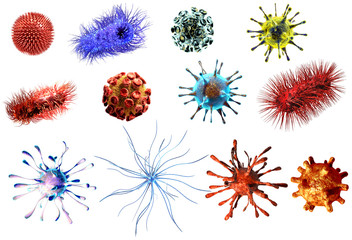 Microbiology is the study of microorganism; a large diverse group of microscopic organism that exist as a single cell or cell clusters. It also includes virus which are microscopic but not cellular. Microbial cells are thus distinct from cells of animals and plants which are unable to live alone in nature and exist as only part of multicellular organism. A single microbial cell is generally able to carry out its life process of growth, energy generation and reproduction independently of other cells, either of same kind.
The existence of microbes was not established until Antony Von Leeuwenhoek (1678) could see them in simple microscope. Lewis Pasteur (1822 – 1895) investigated that boiled medium could remain clear in swan necked flask. Pasteur developed the procedure of gentle heating (pasteurization) to prevent the spoilage of beer and wine by undesirable microbes. This process was later used to prevent milk borne diseases in human beings. Read more